news

Viewing posts from the news category

Recent research shows activated ion electron transfer dissociation has better performance for proteoform fragmentation

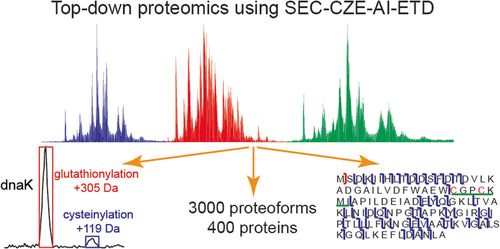
Elijah McCool, a graduate student in Lab of Dr. Liangliang Sun at Michigan State University, recently published on a collaboration with NCBBCS, Capillary Zone Electrophoresis-Tandem Mass Spectrometry with Activated Ion Electron Transfer Dissociation for Large-scale Top-down Proteomics. in the Journal of The American Society for Mass Spectrometry.

Capillary zone electrophoresis-tandem mass spectrometry is recognized as an efficient approach for top-down proteomics because of its high-capacity separation and highly sensitive detection of proteoforms. However, the commonly used collision-based methods often don’t provide the extensive fragmentation needed for thorough characterization of proteoforms. Activated ion electron transfer dissociation (AI-ETD), which combines infrared photoactivation with ETD, has shown better performance for proteoform fragmentation than other methods.
Collaboration Yields Insight on Role of Metabolism in Bacterial Growth

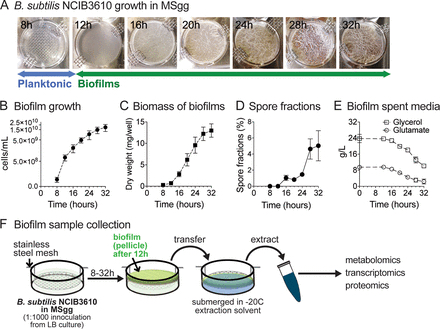
Bacterial biofilms are everywhere in nature and play an important role in many clinical, industrial, and ecological settings. Although much is known about the transcriptional regulatory networks that control biofilm formation in model bacteria such as Bacillus subtilis, very little is known about the role of metabolism in this process. To address this important knowledge gap, this study used a time-resolved analysis of the metabolic changes associated with bacterial biofilm development in B. subtilis by combining metabolomic, transcriptomic, and proteomic analyses. This report serves as a unique resource for future studies and will be relevant to future research in microbial physiology and metabolism. The full publication can be found here.

NCQBCS at ASMS

If you are attending the virtual ASMS conference June 1-12, 2020, please join the presentations by NCQBCS faculty and graduate students:

Tuesday Prof. Lingjun Li will chair a session on Glycopeptides and Glycoproteins from 02:30- 04:10 pm (TOG) and graduate student Trenton Peters-Clarke will present “Ribonucleic Acid Sequence Characterization by Activated Ion-Negative Electron Transfer Dissociation (AI-NETD) Mass Spectrometry.” (TOF 02:50pm)

On Thursday, graduate student Gongyu Li will present “Millisecond Chiral Separation by Multidimensional IM-MS Provides Molecular and Structural Basis for Next-generation Therapy of Alzheimer’s Disease” (ThOB pm 02:50).

Hope you can join us!

Collaboration with Burkard Lab Explores Polo-like Kinase Substrates

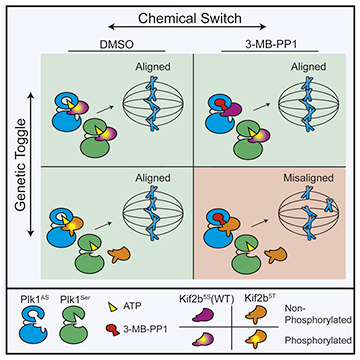
Johnson et al (2020) explore chemically controlling substrates through toggling.

Polo-like kinase 1 has hundreds of substrates and multiple functions that operate within the ∼60 min of mitosis. This paper describes a chemical-genetic system that allows particular substrates to be “toggled” into or out of chemical control using engineered phosphoacceptor selectivity. Kif2b, a known substrate of Plk1 that regulates chromosome alignment was evaluated. Toggling Ser to Thr on Kif2b places these phosphorylation sites under reversible chemical control. Thus, it is demonstrated the ability to chemically control a single substrate by a genetic Ser/Thr toggle.

Glycoproteome and Surfaceome Changes in Isogenic Cells

Leung et al (2020) investigated key cell surface regions and their interactions with the extracellular environment in order to understand how to develop possible cancer immunotherapy drugs in a recent issue of Proceedings of the National Academy of Sciences.

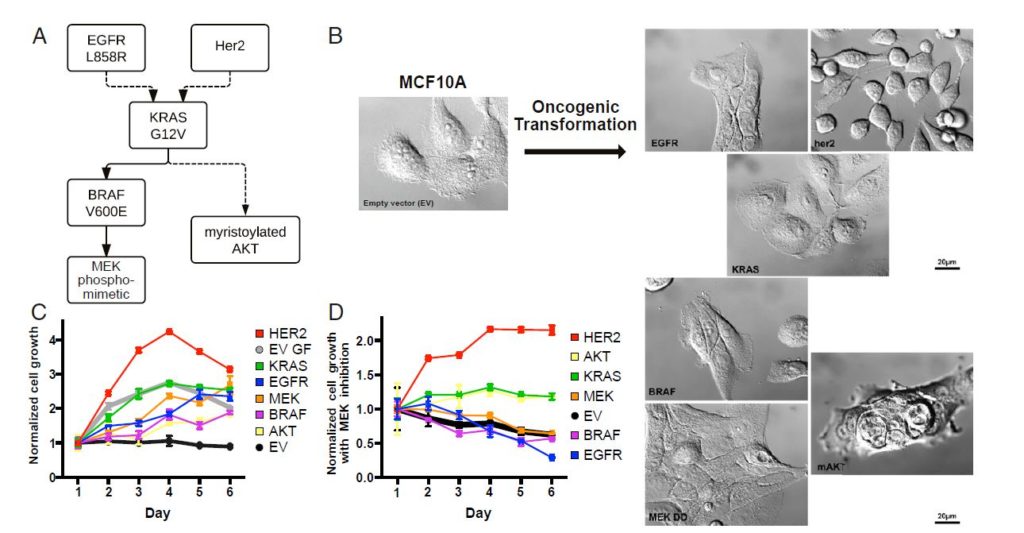
Specifically, in order to understand how oncogenes remodel isogenic cells, researchers conducted quantitative proteomics on N-linked glycoproteins. Here, researchers observed how a large number of surface proteins were changed in isogenic breast epithelial cell lines to express oncogenes.

In addition to looking at surfaceome data with applied glycoproteoics, researchers also applied activated ion electron transfer dissociation (AI-ETD). Here. researchers found changes to the glycoproteome, as induced by the oncogenes.

Researchers said that these studies could help illustrate how specific oncogenes can remodel both the surfaceome and the glycoproteome in cells. Additionally, this research can help in the production of further cancer antibody drug discovery research.

Image of abstract

High CO2 Associated with Downregulation of Skeletal Muscle Synthesis and Ribosomal Biogenesis

High levels of CO2 downregulates skeletal muscle protein anabolism, according to a recent paper by TC Korponay et al (2020)  in the American Journal of American Journal of Respiratory Cell and Molecular Biology.

Two independent conditions are associated with worse outcomes in patients with chronic pulmonary diseases; the retention of a high amount of Co2 (also called “hypercapnia”) and skeletal muscle wasting (also associated with worse outcomes in acute pulmonary disease).
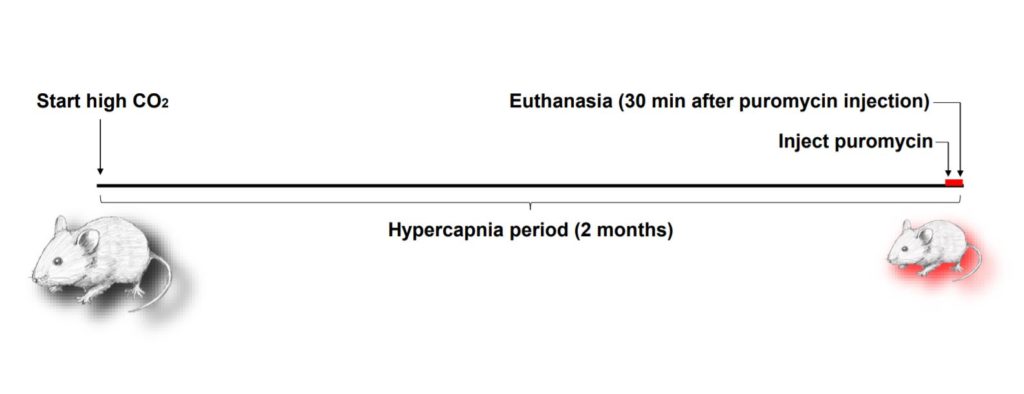
Due to the current lack of research on the role of high CO2 levels in regulating skeletal muscle anabolism, researchers sought to investigate the role of high CO2 levels in weakening skeletal muscle protein synthesis in both patients and mice.

Researchers found that locomotor muscles from patients with chronic CO2 retention had decreased ribosomal gene expression in comparison to patients who did not retain CO2 to the same extent. Additionally, researchers found that mice in a high-CO2 environment had downregulated ribosomal biogenesis in their skeletal muscles, as well as decreased protein synthesis.

Evidently, researchers found that there was an impact of high CO2 levels on skeletal muscle synthesis and anabolism. Researchers suggested future studies focusing on ribosomal biogensis and protein synthesis to counteract the impacts of high CO2 on skeletal muscles.

Investigating Abnormal Chromosome Tolerance in Wild Yeast Cells

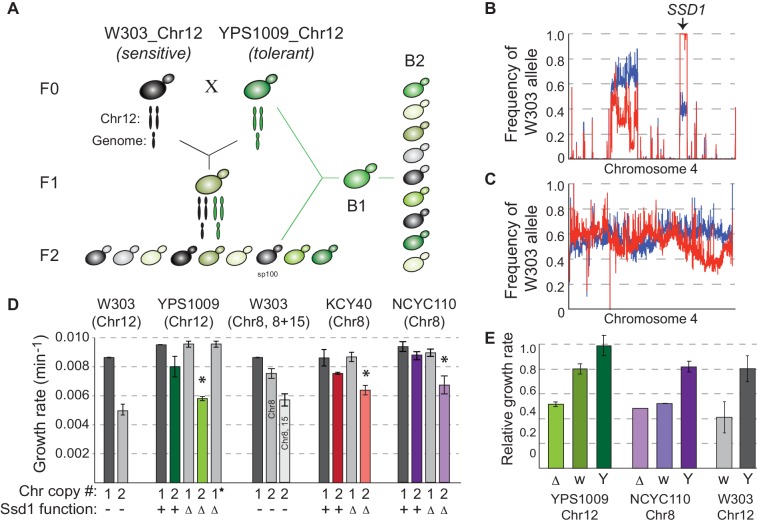
Hose et al (2020) researched the genetic basis of aneuploidy tolerance in wild yeast in a recent edition of Elife.

Aneuploidy, or the abnormal chromosome numbers in a cell, is a harmful condition in developmental stages of wild yeast, yet is also common in plant cancers and pathogenic fungi. It is interesting to note that aneuploidy tolerance varies; for instance, researchers found that some wild isolates of baker’s yeast can tolerate chromosome amplification, while laboratory strains cannot. 

To study the genetic basis of how well wild yeast can tolerate aneuploidy, researchers mapped the genetic basis to Ssd1, an RNA-binding translational regulator that functions in wild strains but is defective in a laboratory strain “W303.” 

Researchers found that aneuploidy tolerance is enabled via a role for Ssd1 in mitochondrial physiology, such as binding and regulating nuclear-encoded mitochondrial mRNAs.